Chosen topic: Elderly Abuse in the form of neglect and isolation
Investigation into both sides of the topic:
- A potential ‘different side’ to this topic could looking at the topic from the carers side of things – the fact that rest homes are facing staffing crisis, as record numbers of nurses are leaving care homes to work in the public sector in anticipation of better pay and conditions. Rest homes are struggling to find staff, and many are receiving warnings of closures.
- Elder abuse can happen anywhere – private homes and care homes alike. The difficulty finding staff for care homes as well as the less than ideal pay and working conditions could mean that people unsuited for the job of carers are being hired purely because of the struggles to find staff – this could in turn mean that elderly people in these homes are being exposed to bad carers as a result.
https://www.stuff.co.nz/business/money/92387760/funding-inhome-care-for-aged-parents
- Another side to this issue could be approaching it from a families point of view? Instead of the poster being from the elderly person’s point of view, designed to guilt people and make them feel bad, I could approach it from the families point of view, acknowledging how difficult it can be to try and take care of elderly people on your own, paying for treatment and care facilities and such whilst trying to deal with your own life, issues and family.
- I could point them to solutions to these issues, such as organisations like the ‘MyCare’ app mentioned in the article above – which offers choices of police checked carers for hire, and also pays these carers higher than the minimum wage they would recieve working in a rest home – tying it in with the nursing issue I mentioned above.
Research:
http://areyouok.org.nz/family-violence/statistics/
- ‘As many as one in 10 people over 65 years in New Zealand will experience some kind of elder abuse in a year.’
https://www.healthnavigator.org.nz/health-a-z/a/abuse-elder/
- Physical abuse:
- inflicting physical pain or causing injury, including inappropriate use of force or restraint and use of medications that sedate or cause harm
- Sexual abuse:
- non-consensual sexual contact of any kind
- Psychological/emotional abuse:
- inflicting mental pain, anguish, or distress on an elder person through verbal or nonverbal acts
- Financial/material abuse:
- illegal or improper use of funds or other resources, and/or exploitation
- Neglect:
- failure to meet the physical and emotional needs of an older person.
- Monday marks the beginning of the 10th annual Elder Abuse Awareness Week. It’s a shock to discover how little humanity some Kiwis have when it comes to the older generation.
- We all need to keep an eye out for elder abuse. “Don’t let fear of meddling in someone else’s business stop you from voicing your concern. It is time to stop elder abuse in our communities,” says Scott.
- According to Age Concern, three-quarters of alleged financial abusers in this country are family members who the older person has loved and cherished.
- Groot has also seen older people go hungry because they can’t afford to pay for their groceries, and go cold because they can’t afford their power bill.
- It’s also not uncommon, says Scott, for family to take over an elderly relative’s home, slowly squeezing him or her into a smaller part of the house. Eventually the older person is moved into residential care and the family take over the whole house.
- A University of Auckland study concluded that we need community and societal change to reduce ageism. Practical strategies include the provision of information to older people, family and carers that support the empowerment of older people.
- Dealing with the problem on a practical level can be difficult. Older people’s money is theirs to spend even if family don’t approve of what they’re doing, says Scott. And many older people will put up with the abuse because they don’t want the family torn apart.
- There have been minor gains over the years. The Crimes Amendment Act has a legal requirement that a person who has care of a vulnerable adult has to protect them from being abused. Likewise the Protection of Personal and Property Rights Act has been strengthened requiring that enduring powers of attorney have independent witnesses.
Existing VCD Precedents on the topic:
I noticed when examining these existing VCD precedents that not many of them use the rhetorical devices we have been examining in class – namely satire / irony, parody and pastiche.
I think this could be for two reasons – one, it could be seen in poor taste as this is quite a sensitive issue, and two because this is an avenue that has not been explored by designers to a great degree yet – this is not a widely advertised topic, unfortunately. Most posters I have analysed have a focus on targeting the emotions of the viewer and making them feel sad, as opposed to attempting to use a clever device – I think it will be important for my posters to strike the right balance between being clever, and being tasteful.
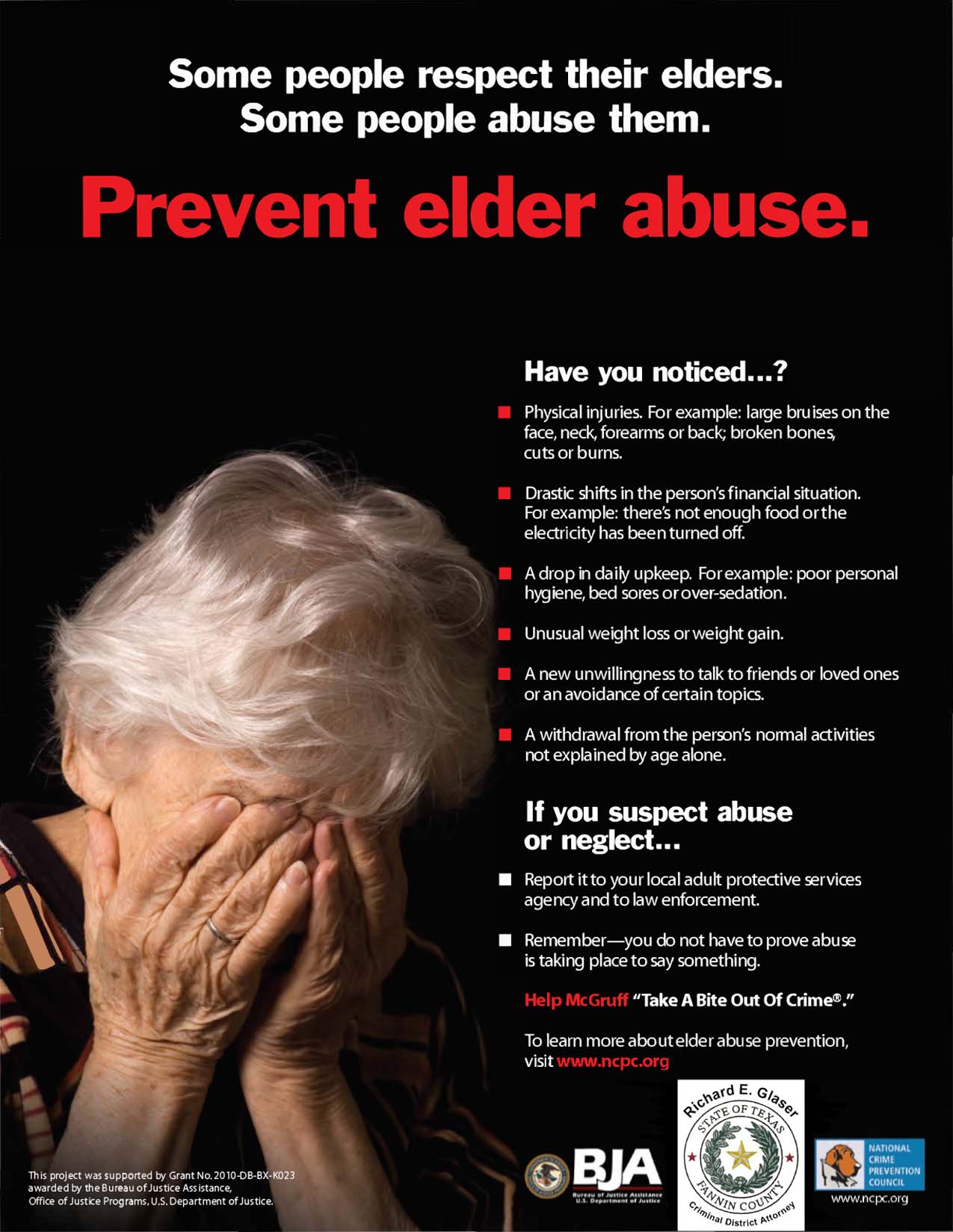
Contrast: Coloured image and red / white text against a black background – black representing isolation.

Scale – crying mans face is blown up, so that we can clearly make out the tear tracks down his cheeks and the pain in his eyes, making us feel sorry for him.

Contrast / Juxtaposition: Black and white image of younger woman placed over the top of the coloured, older womans face

Contrast: Black and white with larger yellow text – yellow often a symbol of danger or caution
Scale: Man is small enough that the black background envelops him on either side – symbol of his isolation / feeling alone and trapped in his pain.
 Shannon Perry Ihi Wehi